'%3E%3Cg%20id='d'%3E%3Cg%20id='c'%3E%3Cg%20id='b'%3E%3Cpath%20id='a'%20stroke-width='1.3'%20d='m1%202%2034%2074%202%201v-2L9-2M8%2027c0%2011%207%2018%206%2028s5%2016%206%2020v7c1%201%204-3%203-8-1-6-5-7-4-20%201-12-5-15-4-26'/%3E%3Cuse%20href='%23a'%20transform='rotate(23)'/%3E%3C/g%3E%3Cuse%20href='%23b'%20transform='rotate(45)'/%3E%3C/g%3E%3Cuse%20href='%23c'%20transform='rotate(90)'/%3E%3C/g%3E%3Cuse%20href='%23d'%20transform='rotate(180)'/%3E%3Ccircle%20r='34'%20stroke-width='2'/%3E%3C/g%3E%3C/svg%3E)

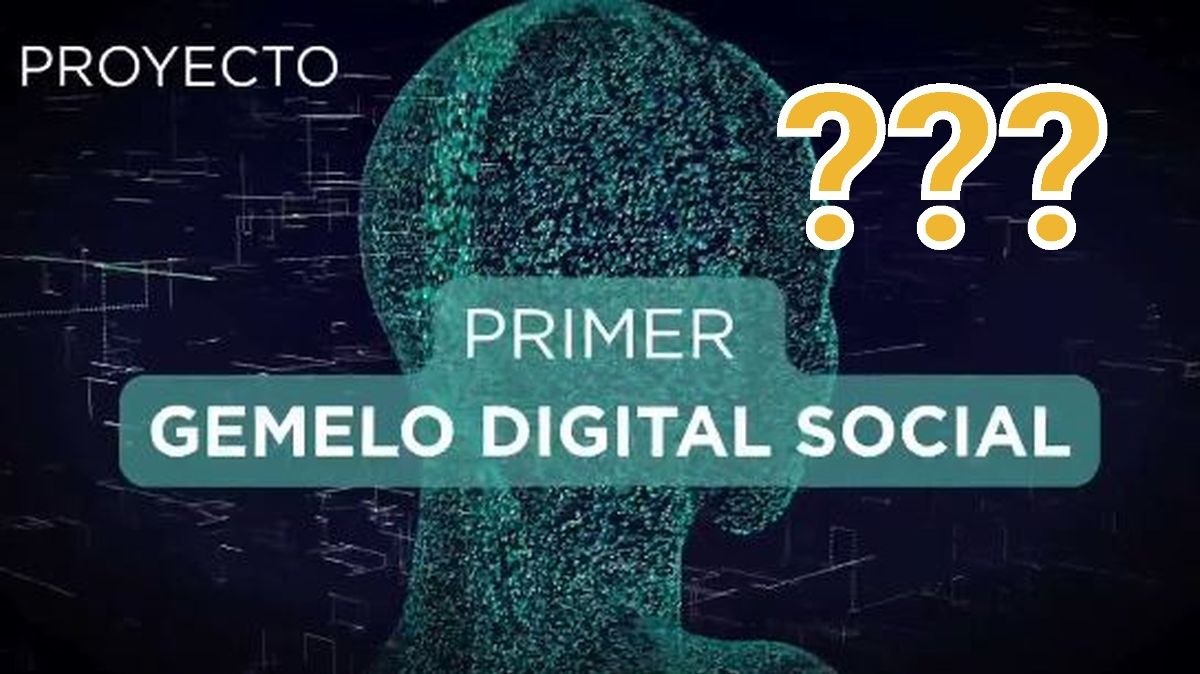
On May 22, 2026, the Ministry of Human Capital, led by Sandra Pettovello, introduced the “Social Digital Twin” via a video on X (formerly Twitter). The platform was described as a system that would integrate citizen data from multiple government agencies to identify patterns, predict behaviors, and optimize social policy decisions. The announcement was shared by President Javier Milei on his social media accounts.
At the time, no regulatory framework accompanied the video. Furthermore, no further details were provided regarding its implementation or safeguards. Consequently, we urgently filed a Public Information Access Request to better understand the scope of this initiative. On Tuesday 7 July, we received a reply.
What We Requested
We submitted an information access request under the terms of Law 27,275 to the aforementioned Ministry, with a copy sent to the Agency for Access to Public Information (AAIP).
Among other points, we inquired about the following:
- The legal framework establishing the program and its current stage of development.
- The specific personal data to be processed and the agencies involved (such as ANSES, RENAPER, ARCA, Migraciones, Health, and Education).
- The legal basis enabling these data transfers, particularly in light of the Supreme Court’s “Torres Abad” ruling.
- Whether the system would make automated decisions regarding social program beneficiaries or retirees, and what level of human oversight would be involved.
- The existing safeguards against discrimination or profiling.
- The technology provider involved.
- Specifically, whether meetings had occurred with representatives from Palantir Technologies or with Peter Thiel within the framework of this program, considering that the company provides software for similar purposes under the same name.
The Response
A month and a half later—following an extension request—the response arrived. According to the agency, “as of today, there is no project under development or in the design phase” regarding the Social Digital Twin, defining a project as “the minimum possible unit of resource allocation” directed toward a specific objective. In other words, the Ministry that had announced the initiative via video months earlier now states, in a formal inquiry, that the initiative does not exist as such.
None of our 24 specific questions were answered or even addressed. This directly contradicts the requirements of the Information Access Law and international principles on access to public information. There was no mention of the technology provider, the databases involved, or the specific question regarding meetings with Palantir, which extended beyond the narrow scope of this particular program.
Complete Response in spanish available hereAn Empty Response Rife with Problems
This response was deficient, delayed, and devoid of substance. By requesting an extension, the Ministry utilized the maximum time allowed by law simply to state that there was no subject matter to report on. This denial was not based on any of the exceptions provided under Law 27,275, nor does it adhere to its principles of maximum disclosure. At a minimum, the Ministry should have addressed the questions not strictly tied to the “Social Digital Twin” program, such as the inquiry regarding Peter Thiel’s visit. Instead, they ignored them entirely and issued a generic response that goes against the spirit of the law and the right to public information—a right meant to serve as a tool for civic oversight of government actions and an instrument for freedom of expression. They completely avoided ruling on any substantive matters: neither regulations, data, providers, nor Palantir.
Governance by Video
Introducing a policy that compromises the personal data of millions of people—from childhood to old age—via a viral social media video without a supporting decree or resolution is not a mere formal oversight; it is a method. It allows the government to make announcements for communicative effect without assuming any of the obligations imposed by an administrative act, and without assessing the risks that a program of this nature would entail for fundamental rights.
The Broader Context
Whether or not this remains the definitive name or the program that is eventually formalized, the risk architecture described by the “Social Digital Twin” (the consolidation of databases from multiple agencies, the generation of inferred profiles, and automated decision-making regarding vulnerable populations) aligns with what we have been warning about since Emergency Decree (DNU) 941/25. This decree concentrates data from RENAPER, ANSES, and ARCA into the intelligence system without adequate judicial oversight.
The fact that this specific project is not currently “underway” does not change the assessment. The infrastructure, the weakened regulatory framework, and the underlying business logic provide clear conditions for such an initiative—under this or any other name—to move forward at any moment. For this reason, we continue to insist on the need for clear standards regarding the processing of personal data and the use of technology by the State, as detailed in our report The State of Data: From Registry to Surveillance.
“The State of Data: From Registry to Surveillance” Spanish version