

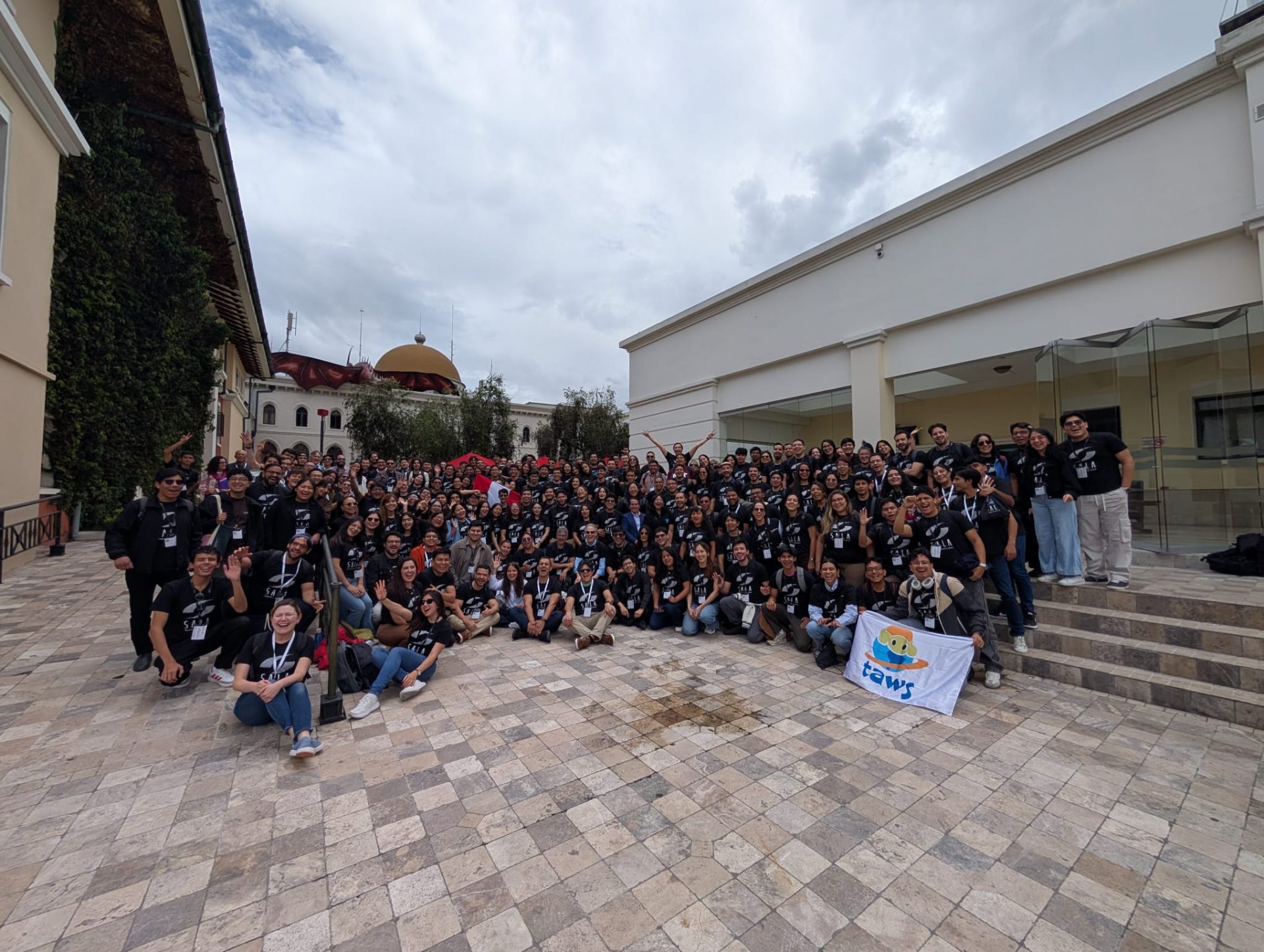
From March 9 to 12, we participated in the Summit of AI in Latin America (SALA), held at the Universidad San Francisco de Quito (Ecuador), a space for gathering and debate on the present and future of artificial intelligence in the region.
Human-Centered AI
Luciana Benotti presented the talk “Human-Centered AI,” addressing some of the key challenges in thinking about AI developments that are more just and relevant to our contexts.
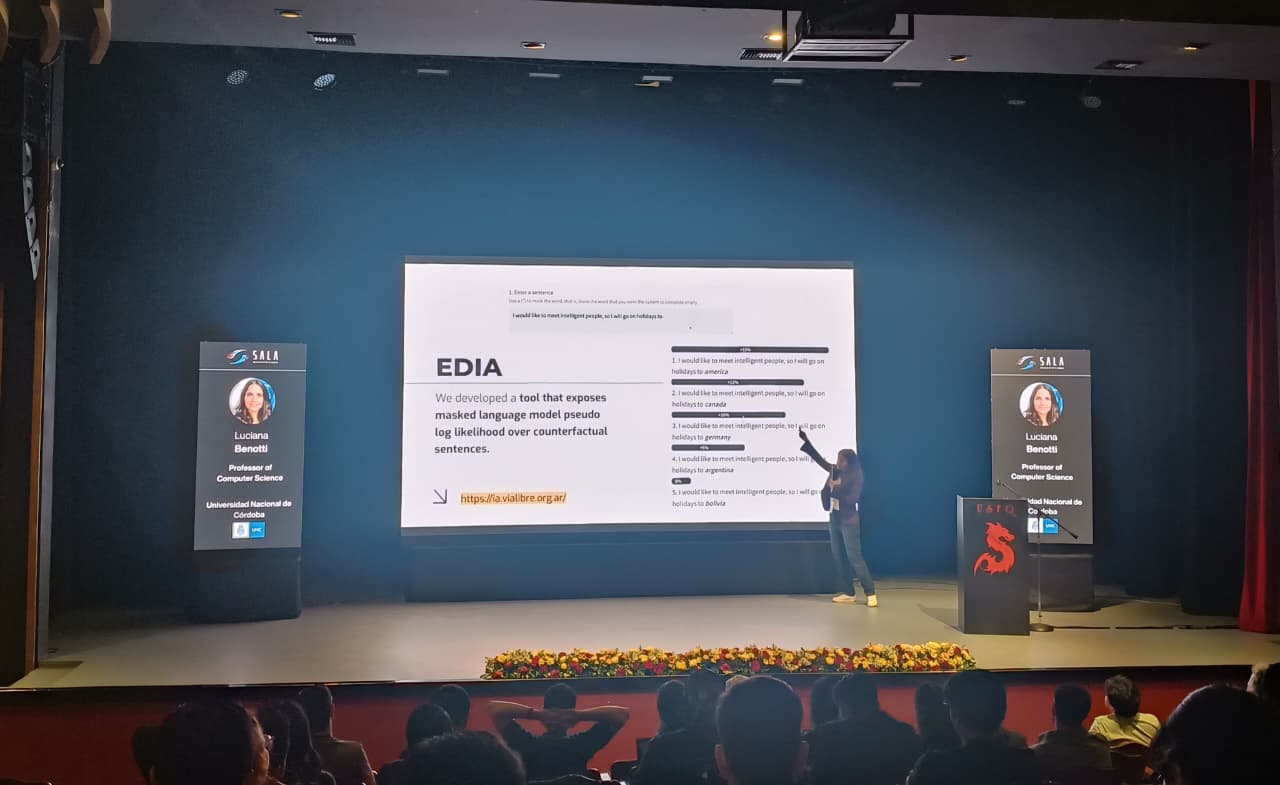
The presentation highlighted that, in order to build truly human-centered AI, it is essential to improve how we evaluate systems—not only in terms of performance, but also in how they assess their own confidence (calibration) and in understanding the errors they make.
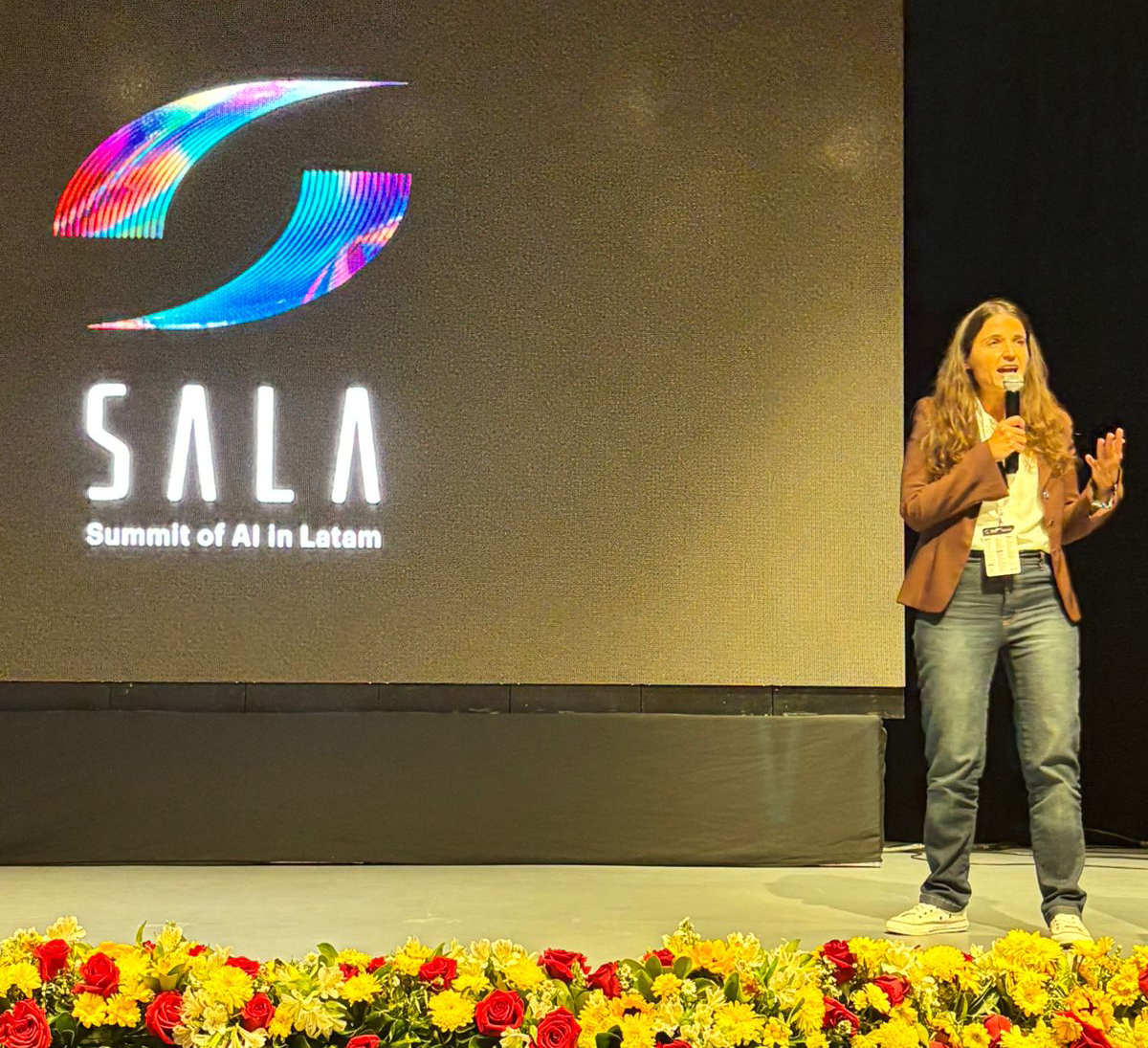
It also emphasized the need to develop regional benchmarks that reflect the cultural and linguistic contexts of Latin America.
This work is based on research developed together with Marcos Gómez, Emilia Echeveste, Guido Ivetta, Hernán Maina, Sofía Martinelli, Nair Mazzeo, Pietro Palombini, Beatriz Busaniche, and Lourdes Aguiar Cau.
👉 See presentation
Technological Sovereignty from a Local Perspective: Data, Models, and Territory
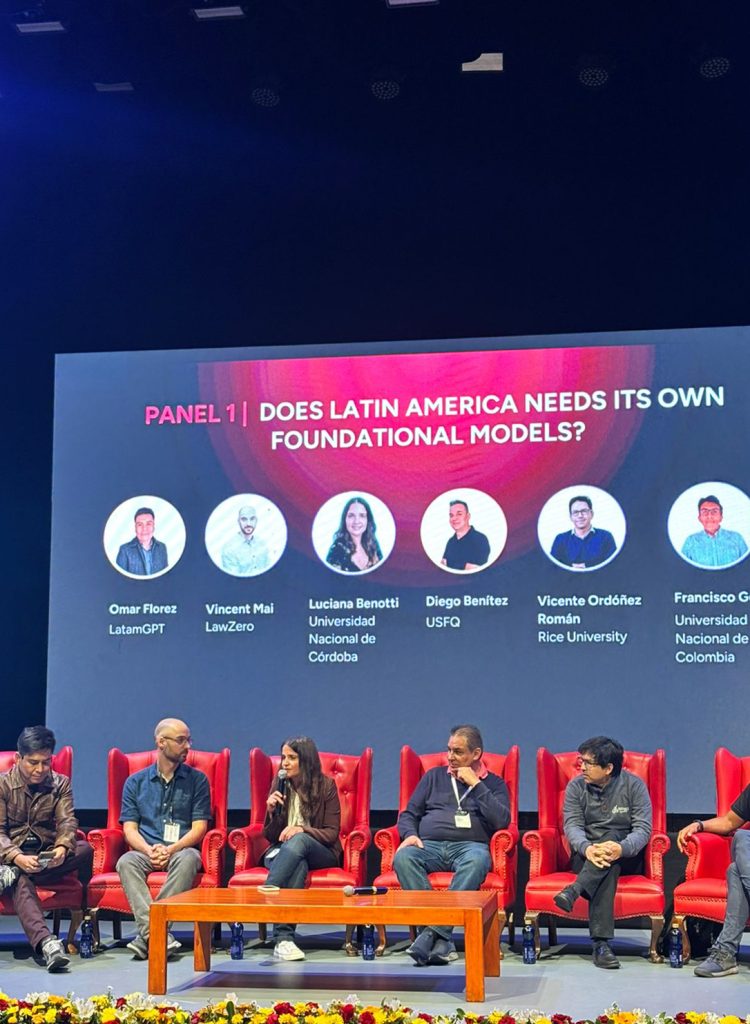
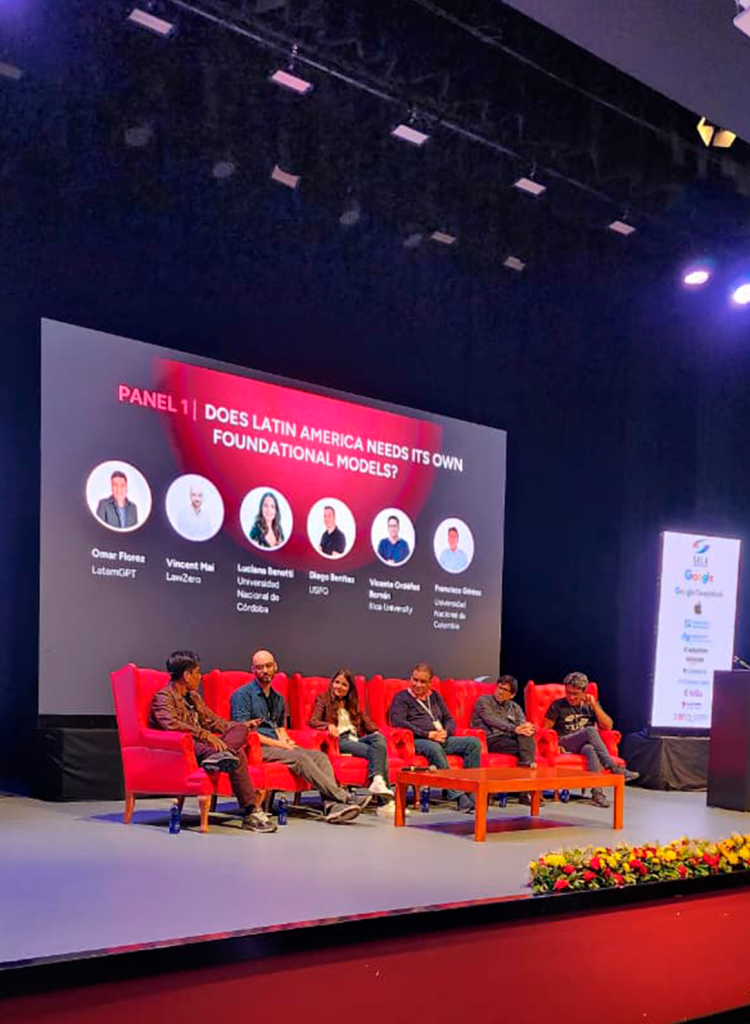
During the event, Luciana Benotti also participated in the panel “Does South America Need Its Own Foundational Models?”, alongside Vincent Mai, Vicente Ordóñez, Diego Benítez, and Francisco Gomez. Moderated by Omar Florez.
Among the key questions discussed was whether Latin America’s main challenge is the lack of models or the lack of high-quality data, and in which areas the region could have comparative advantages.
A Possible Strategy: Local Impact and Distributed Effort
From Fundación Vía Libre, we propose a possible strategy aimed at generating impact from the ground up: working with local, municipal, or provincial governments as a starting point.
“In AI, there is a tendency to think at a large scale, but if you want to create real impact, it is key to start locally, with experiences that respond to the concrete needs of people in a given place—and then allow those experiences to travel elsewhere.” — Luciana Benotti
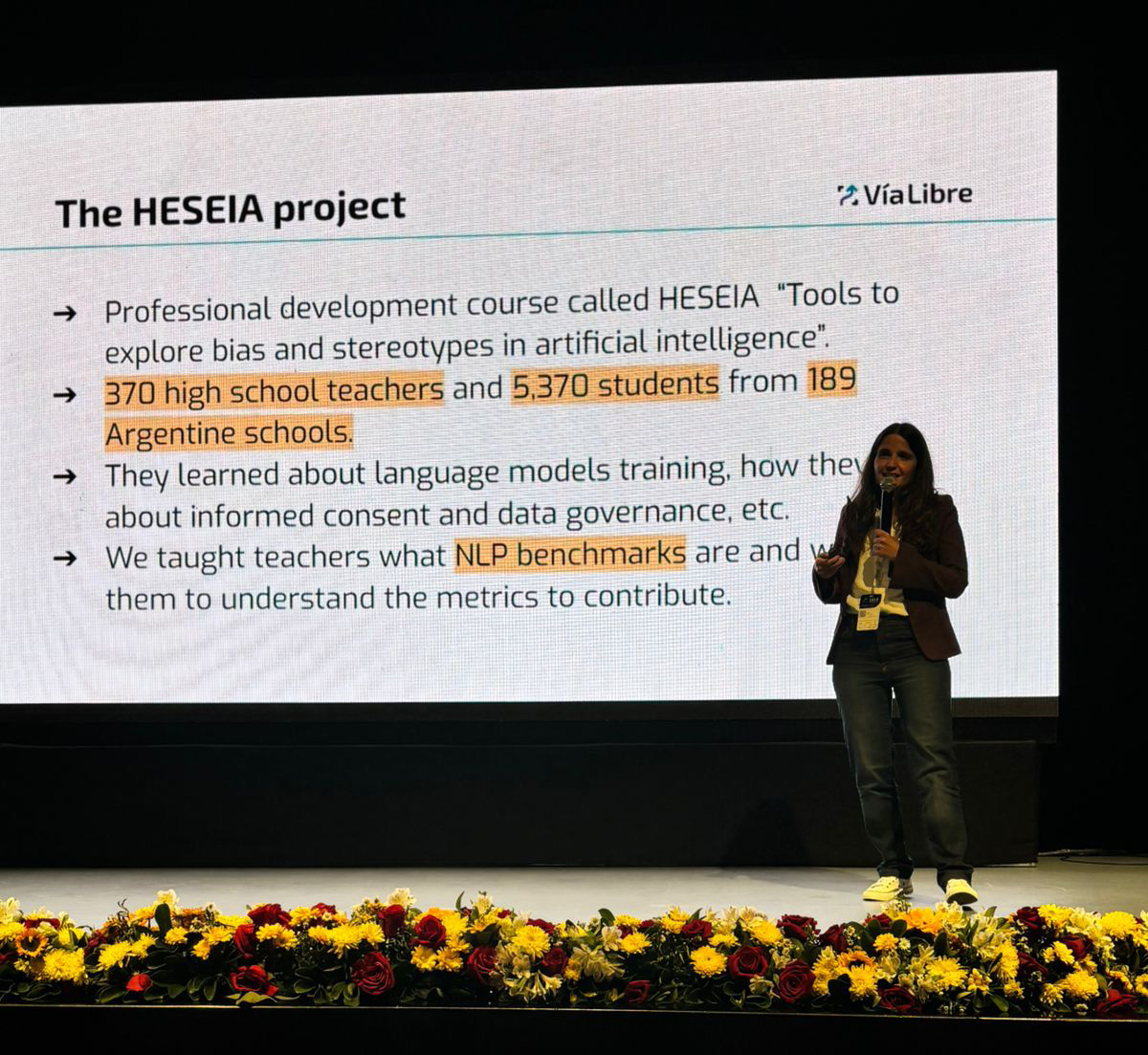
Local governments and organizations are the ones in direct contact with people’s everyday challenges. From this position, it is possible to develop pilot experiences with local impact, and then adapt and replicate them in other contexts. This is why our partnerships with organizations, as well as with the Ministry of Education of the Province of Córdoba, allow us to promote situated initiatives, generate collective learning, and lay the groundwork for a distributed network that strengthens the development of artificial intelligence from and for the region.
We believe it is important to foster a distributed effort, where each actor—whether from a city or province—can promote their own AI developments. Looking ahead, the goal is to connect these experiences into a distributed network that enables the sharing of resources, knowledge, and lessons learned across regions.
Thinking about human-centered AI means starting from dialogue with local realities.